


Boat Seat Replacement: 8 Signs It's Time to Upgrade Your Marine Upholstery

You need to know the right time to invest in replacement boat seats. This protects your vessel's value and keeps you comfortable on the water. Cracked vinyl, fading upholstery and water-damaged foam go beyond cosmetic problems. Worn marine upholstery can compromise seating structure and reduce comfort. It also affects resale value by a lot. You need to understand the signs that point to boat seat replacement versus simple repairs. This helps you make budget-friendly decisions. We'll walk you through eight indicators that show it's time to upgrade your marine seating. These range from visible vinyl damage to structural concerns. We'll also explain when replacement boat seats become the smarter long-term solution.
Visible Cracks and Tears in Marine Vinyl
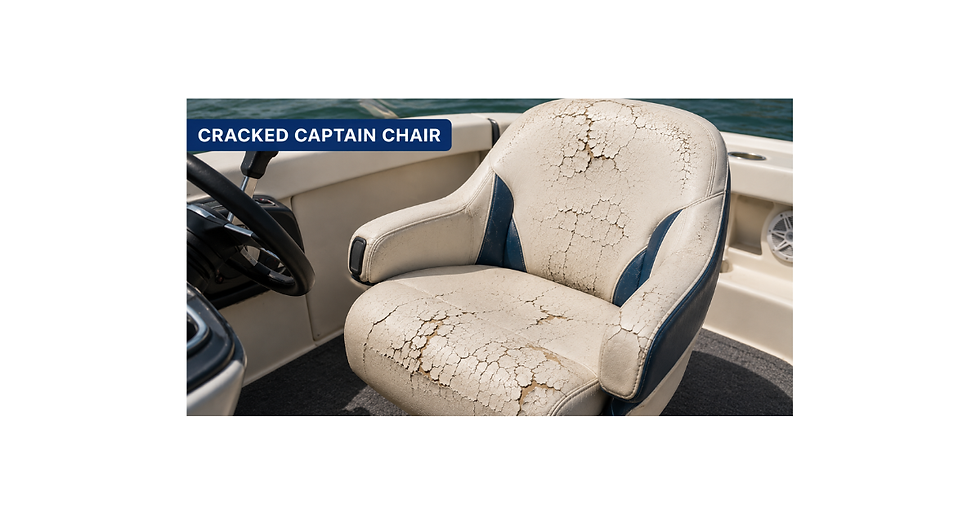
Marine vinyl damage starts with small imperfections but progresses quickly without intervention. Brittle seams where thread breaks or pulls through the vinyl signal compromised structural integrity. Hardened vinyl that reaches what professionals describe as the "cardboard stage" of stiffness cannot be revived, no matter how much conditioner you apply. These conditions separate minor surface issues from seats that need replacement boat seats.

When to Repair vs Replace Cracked Boat Seat Vinyl
A tear or crack creates an entry point for water to penetrate the foam core. Moisture infiltrates and the foam acts like a sponge, breeding mold and mildew from the inside out until the foam rots and loses structural integrity. Repairing the marine vinyl makes sense if the internal foam core remains dry, free of deep mold and structurally sound. Replacement becomes necessary then only when foam is rotted severely or vinyl is disintegrating beyond repair.
Small tears respond well to emergency measures. I've used super glue to stop tears in out-of-sight areas. Some boat owners apply marine-grade adhesives like 5200 caulk into punctures and press the vinyl back together. Vinyl repair patch kits work for cuts and small tears. But these solutions address tears, not cracks. Cracks indicate vinyl aging and plasticizer loss, meaning replacement is just a matter of time. Duct tape serves as an emergency fix while boating but creates an unsightly and ineffective long-term solution.
Repairing localized tears or re-dyeing faded sections can save up to 80% compared to replacement costs. Minor repairs like fixing small tears or burns are affordable.
How UV Exposure Accelerates Vinyl Damage
UV radiation triggers photodegradation in marine vinyl. UV rays hit the vinyl polymer and break down chemical bonds in the material, leading to "off-gassing" where plasticizers evaporate. Plasticizers are chemicals that make vinyl soft and flexible. The vinyl becomes brittle once those plasticizers are gone, which explains why old boat seats often crack the moment you sit on them. This process accelerates in high UV areas where intense sun exposure bakes these chemicals out faster.
UV light and heat cause the oils and conditioners embedded in marine vinyl to evaporate over time and dry out the material. Repeated exposure causes vinyl to crack under pressure. Substances like sunscreen compound the problem meanwhile. Avobenzone, found in most sunscreens, strips away the topcoat of vinyl and exposes seats to further wear and tear. This causes vinyl to crack and peel over time, shortening the lifespan of boat interiors.
Cost Considerations for Vinyl Repairs
On-site repair services using water-based products and restoration techniques offer budget-friendly alternatives to full reupholstering. These specialists repair and re-dye tears, holes, scuffs and scratches at your location. To cite an instance, professional restoration can address cracks, sun-fading, tears and burns without removing seats from your boat.
Restoration options become limited in many cases once sun damage penetrates deeply. Products and DIY methods may mask damage temporarily but cannot restore structural integrity and sometimes hasten vinyl degradation. Custom marine upholstery that exceeds original manufacturer specs uses high-density, antimicrobial foam and UV-stabilized threads built to withstand marine environments. Quality materials upfront save money in the long run, especially for boat owners in intense UV locations like Lake Havasu City where sun exposure accelerates wear on marine upholstery.
Fading and Sun Damage from UV Exposure
Faded upholstery tells a story about your boat before potential buyers even step aboard. Sun exposure doesn't just dull seat color. It transforms vibrant reds, blues and crisp whites into chalky, washed-out versions that make even well-maintained vessels feel tired. Patchy coloring, overall dullness or yellowing on white vinyl are telltale signs that UV damage has progressed beyond surface-level concerns.
Why Boat Seats Fade Faster in High UV Areas
UV exposure stands as the number one reason boat seats fail. Intense sunlight causes colors in fabrics to fade over time and makes your boat's interior look old and worn out. The fading process accelerates in high UV areas where relentless sun exposure compounds daily. Boating destinations like Lake Havasu City experience intense UV radiation that accelerates wear on marine upholstery and bakes seats with sustained direct sunlight throughout extended summer seasons.
Heat intensifies the damage on extra hot summer days. Marine vinyl can warp when excessive heat combines with UV exposure and leads to obvious damage that becomes harder to fix as time passes. Even strong fabric can go chalky, brittle or faded in just a few seasons without UV protection. The sun doesn't work alone. Substances like sunscreen worsen the deterioration, with avobenzone found in most sunscreens stripping away the topcoat of vinyl and exposing seats to further wear and tear.
The oils and conditioners embedded in marine vinyl evaporate with continuous exposure and leave material dried out and vulnerable. Damaged seats become uncomfortable for you and your passengers beyond esthetics. Sun exposure weakens stitching and deteriorates padding from prolonged UV assault. The combination of fading, weakening fibers and material breakdown creates multiple failure points that compromise both appearance and function.
Effect on Resale Value
The condition of the upholstery is one of the first things potential buyers notice when they step onto a boat. Cracked, faded or moldy seats instantly signal neglect and will drive down the asking price. A pristine interior suggests that the mechanical components of the boat have likely been well-cared for. Clean, restored interiors show buyers the boat is well maintained and reduce negotiation losses.
Faded seats create immediate visual effect during inspections. Buyers associate sun-damaged upholstery with deferred maintenance and raise questions about what other systems might have been neglected. The psychological effect of worn, discolored seats cannot be overstated. They dominate the interior visual experience and become a focal point for price negotiations. You can protect your asking price and accelerate the sale by investing in replacement boat seats before listing your vessel.

Marine-Grade UV-Resistant Materials
Marine-grade materials are engineered to withstand harsh environmental conditions and ensure seats maintain quality and appearance over time. Solution-dyed acrylic fabrics offer superior fade resistance compared to standard materials. Sunbrella's Color to the Core technology saturates every fiber with pigment at the molecular level, so the vibrant color you choose is the color you keep, resistant to UV rays, salt and harsh weather. Durable fibers saturated to the core with UV stabilized pigments ensure fabrics won't fade or wash out.
Marine-grade fabrics like Sunbrella and Outdura are designed for outdoor use and are resistant to fading, mildew and moisture. These fabrics use solution-dyed acrylic fibers, which ensure color remains vibrant even after prolonged exposure to sunlight and saltwater. Marine vinyl is engineered for the marine environment with superior UV resistance compared to regular upholstery vinyl.
Advanced technologies continue improving UV protection. Cool-touch marine vinyl featuring heat-reflective pigment technology stays cooler in direct sunlight and addresses both fading and comfort concerns. Marine vinyl remains UV-stable, water-resistant and mildew-treated for complete protection. The Skin Cancer Foundation recommends certain Sunbrella fabrics in shading products as part of a complete sun protection regimen and underscores the material's proven UV-blocking capabilities.
Choosing true marine formulations rather than standard indoor vinyl makes the difference between seats that last seasons versus seats that fail within a year. Quality materials upfront extend the lifespan of boat seat upholstery and provide long-term comfort and esthetic appeal.

Mold, Mildew, and Water Retention Issues
Water damage creates problems that go deeper than surface-level concerns. Visible cracks or fading you can spot right away, but moisture infiltration works from the inside out. It creates conditions where mold and mildew can set in within 24 to 48 hours after an original soaking incident. Mold in boat cushions isn't just a cosmetic problem. These biological contaminants become difficult to remove once they take hold and increase health risks for everyone aboard your boat.
Health Concerns from Moldy Boat Seats
The most concerning impact of mildew centers on potential risks to health. Prolonged exposure to mildew can lead to respiratory problems, allergies, and other health issues. An unpleasant odor from your seating areas suggests mold, mildew, and trapped moisture have developed in the foam padding or under the fabric. This leads to foul odors that can ruin a day out on the water. Addressing these odors improves the ambiance of your boat and will give a healthier environment for everyone on board.
Mildew can have several negative effects on replacement boat seats beyond health concerns. Mildew leaves unsightly stains that are difficult to remove and makes seats look old and neglected. Mildew also has a physical impact on marine upholstery. Mildew weakens the seat material over time and leads to tears and holes. This reduces the boat seating's lifespan by a lot and results in replacements that get pricey.
Signs of Compromised Foam Padding
The foam inside has likely deteriorated if your seat feels squishy, holds water, or stays damp for hours. Assume water has been living inside it if the cushion feels unusually heavy or smells musty. Waterlogged foam accelerates mildew growth and creates an environment where biological contaminants thrive when you sit on it.
Marine cushion foam should be closed-cell, which means it's non-absorbent and prevents water retention and mildew. Closed-cell foam is designed for marine environments, but open-cell foam used in furniture absorbs water and fails quickly on a boat. Cleaning alone won't fix it after mildew has penetrated below the surface. The foam underneath may be compromised. Seats that feel flat or stay damp long after use signal foam that has lost its structure through compression or waterlogging.
Moisture reaches the foam after the vinyl cover stops doing its job, and the seat gets heavier, colder, and slower to dry. Trapped moisture can turn a simple upholstery refresh into a structural rebuild if the backing board is wood. Old adhesive crumbs, broken staples, mildew residue, and grit can print through the underside and shorten the rebuild's life. Prompt attention matters because mildew spots and organic messes are easier to remove early than after they bake in.
Mildew-Resistant Fabric Options
All Sunbrella fabrics are resistant to mold and mildew. Mold or mildew may occur from exposure to dirt, debris, sun lotion, or other environmental elements, but you can simply spot clean with a bleach solution. Sunbrella fabrics are engineered with built-in moisture resistance and a protective finish that won't wash away even after daily use. Sunbrella fabrics stand up to life's toughest messes.
Sur Last fabric is constructed from 100% solution-dyed polyester and engineered to be mold and mildew resistant, durable, and easy to maintain. Hydrofend fabric provides water repellent protection and works great for creating boat covers and enclosures. It also protects new or recently upholstered outdoor cushions and furniture. Aqualon Edge marine fabric comes equipped with Perfecta Marine heat gain reduction technology. It keeps interiors cooler than leading brands while boats stay shielded from sun, salt, mold, mildew, and abrasion.
Expanded vinyl, also known as PVC (polyvinyl chloride), is very common in marine fabric upholstery. The material resists mildew and mold and can be coated with anti-microbial chemicals. Acrylic is ultra violet ray resistant by nature and is also mildew, moth, oil, and chemical resistant. Choosing fabrics that offer breathability, UV ray resistance, and mildew and stain resistance is important since your craft will be in storage for long periods.
Loss of Cushion Support and Comfort
Sitting on a boat seat that's lost its support feels like perching on a park bench after the padding wore out years ago. That sinking feeling where you bottom out against the hard base isn't just uncomfortable. It signals foam breakdown that affects your entire boating experience, especially when you have long fishing trips or extended cruises where you spend hours in the captain's chair.
How Foam Breaks Down Over Time
Foam degradation happens through repeated compression cycles. Your cushions are more than 10-15 years old? Getting new foam and starting fresh is often worth the investment. Take a cushion out of its cover and let it air out. The foam smells musty, has mold or is misshapen and degraded? Time to think over complete new cushions.
The type of foam in your seats determines how fast breakdown occurs. Open cell foam is the most common type and comes in varying densities. You can shape it to any size desired. It offers densities from very soft to extra firm, depending on your preference for sitting, sleeping or even stepping. But open cell foam absorbs water like a sponge when the vinyl cover fails, and this accelerates decomposition.
Closed cell foam provides a dense and firm option that floats and won't absorb water like open-cell foam. It's best for bow or cockpit cushions and can be used for flotation as a bonus. Dry foam offers a porous structure that does not absorb water and is one density. You'll use it if your cushions will be exposed to excessive amounts of water or left outdoors.
Compression over years of use, combined with water-absorbent foam without drainage, guides you to seats that feel squishy, hold water, or stay damp for hours. So the foam inside has deteriorated beyond the point where recovery is possible.
Testing Your Seat's Compression
A simple compression test reveals whether your foam still provides adequate support. Press down firm on the seat cushion with your hand and release. Quality marine foam should bounce back to at least 90% of its original height within seconds. The indentation remains visible or the material feels compressed for good? Replacement becomes necessary.
Sit in your normal operating position and pay attention to whether you feel the hard base beneath the cushion. You can't go a whole day on the boat without your back aching? Time to upgrade those boat seats. Poor posture from inadequate cushion support can lead to chronic back pain, and this makes seat evaluation about health as much as comfort.
High-Density Marine Foam Benefits
High density marine foam offers more support and structure, better weight distribution, longer lifespan, and resilience under heavy use. It molds just enough to your shape without going flat and strikes the perfect balance between firm and cushy. This foam resists just about everything nature throws at it, and your seats won't break down or get moldy after a couple of rainy days.
Density ratings guide material selection based on seat location and use intensity. Medium density foam at 1.8-2.5 lb/ft³ works well for backrests and light-use seats. High density foam at 2.5-3.0+ lb/ft³ is ideal for seat cushions, helm chairs, and long-use areas. Very high density at 4.0+ lb/ft³ serves best for heavy-duty applications and maximum durability.
HR foam and Dry Fast are top picks for seating applications. Call it doubt? Go with higher density for seating because being over-supported beats being under. Many boat owners prefer creating layered cushions and combine a firmer base with a softer top layer. This approach offers extra support without sacrificing comfort. You like a firm base but a softer top? You can always combine different densities of foam to create the perfect fit and feel.
High density marine foam can last 5-10 years or more, depending on usage. It might cost a little more upfront, but you'll save money on replacements and repairs over time. Replacing old foam with marine-grade quick-dry or closed-cell foam, especially in humid or rainy regions, proves worth the upgrade.
Broken or Corroded Hardware and Frames
Hardware failures don't announce themselves with visible tears or obvious stains. Internal nuts and bolts can dissolve completely while the vinyl cover remains intact. You might find yourself sitting on a seat that could collapse without warning. This hidden deterioration makes corroded hardware one of the most dangerous reasons to think about replacement boat seats.
Identifying Structural Safety Issues
Saltwater, chlorides, humidity, and continuous motion all accelerate corrosion and fatigue in marine hardware. These factors place intense stress on hardware components and create conditions where structural connections can fail without warning. Deterioration can go unnoticed until failure occurs because structural connections are often hidden inside assemblies.
Galvanic corrosion occurs when dissimilar metals make contact in the presence of an electrolyte like saltwater. This accelerates deterioration of the more reactive metal and can compromise joint integrity. To name just one example, using 316 stainless steel fasteners on aluminum boat components without proper isolation leads to rapid aluminum corrosion. Moisture trapped in tight gaps can also trigger crevice corrosion, even on corrosion resistant alloys.
Stainless steel that rusts remains one of the most common and frustrating hardware failures boat owners encounter. Despite its name, stainless steel corrodes when exposed to saltwater under certain conditions. Crevice corrosion appears at confined geometry locations such as under mounting feet and around fastener holes, while exposed surfaces of the same part remain clean.
Inspect your swivel seats and pedestal mounts for rust stains, loose connections, or unusual movement. Seats with molded plastic bases are vulnerable, as these bases crack in multiple places and become flimsy over time. Internal structural support has failed if seat backs lean more than they should or the base flexes too much.
When Hardware Replacement Isn't Enough
Some boat owners find they can't replace hardware without removing the vinyl covers from frames. At that point, the question becomes whether recovering the seats makes financial sense. Upholstery shops charge $180 per hour, and many refuse marine carpentry work.
Corroded hardware repair often requires dealing with the structural damage it caused. If the backing board is wood and moisture has penetrated, what starts as a simple hardware replacement transforms into a structural rebuild. Plastic seat bases that have cracked need reinforcement or complete replacement, not just new mounting bolts.
Therefore, when internal hardware has dissolved and vinyl removal becomes necessary for repairs, investing in complete replacement boat seats proves more economical. Quality marine seats feature stainless steel hardware designed for saltwater environments and eliminate the corrosion cycle that destroyed the original seats. Professional marine upholstery specialists use marine-grade materials throughout the construction. Hardware, frames, and mounting systems work together to provide structural integrity over the long term.
Seam Separation and Stitching Failures
Seam failures reveal themselves differently than surface cracks. Thread that once held panels together gives up and creates gaps where stitching used to be. This isn't a surface issue; it's a structural failure where the stitching has given up. A tear along a seam isn't cosmetic but rather a structural problem. Slapping some filler on top won't hold up to the stress of people sitting down and shifting around.
Why Marine Thread Deteriorates
The main factors contributing to thread degradation are sunlight, heat, moisture, and age. Sunlight, especially harsh UV rays, makes threads brittle and causes them to break. Heat and moisture are threads' worst enemies and cause threads to weaken while colors fade. Threads lose their strength over time and become more susceptible to breaking.
Cleaning agents compound the problem. Many cleaning agents include small amounts of bleach that will eat away at seam threads. The sun gets to the thread and once that happens, if the thread is not UV stabilized or proofed, it only has a short life span and the seam it's holding will give way.
Thread quality varies by type. PTFE thread (Teflon) can be exposed to sun, salt, chemicals, or pollution and will last for the life of your boat canvas. It's not offered by all fabricators. Polyester (also called dacron) is the most common marine thread you'll find in marine canvas shops. These threads are UV resistant and heat resistant, but weaken in the sun eventually. Nylon thread is a bad choice for outdoor thread.
Premium thread eliminates the need to re-stitch in three years like polyester thread. Customers won't have to have it re-stitched because the thread has sun rotted or deteriorated from chemical cleaning of the vinyl upholstery.
Repair Limitations for Separated Seams
Seam separation repair requires reinforcing the seam from the inside using a sub-patch and a solid, flexible marine-grade adhesive. If the original thread has rotted out (which is super common), you might even need to re-stitch that section with heavy-duty, UV-resistant thread before you think about the filler.
The repair process demands surgical precision. The entire cushion needs to come off the seat, seam taken apart to avoid further damage carefully, then stretched and re-stitched (provided the material is not so deteriorated there is not suitable material to sew), and re-stretched and stapled back to the seat base. If the vinyl is too old and brittle, it may be a lost cause. Seam fixes become only a temporary solution as the vinyl has begun to deteriorate and is approaching its end of useful life.
Persistent Odors That Won't Go Away
A stale, musty smell that lingers after cleaning points to problems you can't see. Upholstery that hasn't been cleaned or dried right develops mold and mildew, but it also traps odors even without visible mold growth. That persistent smell isn't surface dirt. Moisture has penetrated deep into the foam core where biological contamination runs beyond the reach of spray cleaners.
What Boat Seat Odors Indicate
A musty smell inside stored boats signals hidden issues like moisture buildup, mold growth, or poor ventilation. Boat owners rank interior odors among their most common complaints. Mold and mildew stand as the main sources of these unpleasant smells.
Stinky boat seats require immediate action. Remove the covers and check if the interior stuffing feels wet or damp. Fabric that absorbs odor requires aggressive cleaning or deodorizing methods to correct the problem. Mildew odor or staining persists sometimes because it has penetrated into seams or the foam underneath.
Visible signs like dark spots on walls or a stale, damp smell indicate mold or mildew presence. But if everything still smells musty and looks dry, the issue may be trapped within soft materials. Foam that feels damp, heavy, or smells musty indicates contamination has reached the cushion's core.
Cleaning vs Replacement for Odor Issues
Surface approaches won't resolve deep-seated smells caused by mold growth, air circulation issues, or prolonged moisture exposure. You should wash and dry seat covers and wipe down surfaces with marine upholstery cleaner to keep upholstery protected and smelling fresh. Therefore, this preventive approach works only when contamination remains superficial.
Think over replacement boat seats if odor remains after multiple cleanings and full drying. Persistent musty smell even after cleaning and airing out signals the time for professional involvement. Seams showing black spotting that returns fast indicate contamination has set in for good. Boat cushions and seats that need replacing shouldn't use the same foam re-wrapped and reused, as mold and mildew will likely be living in the cushions and will grow from the inside out, contaminating new materials fast.
How Long Boat Seats Should Last
Boat seats last 5-10 years or longer with proper care and protection from the elements. Marine-grade materials resist fading, cracking, and deterioration caused by exposure to the harsh marine environment. This extends service life by a lot compared to standard upholstery.
Average Lifespan by Material Type
Marine-grade vinyl and fabric ensure durability and resistance to the elements. These materials are developed to resist mold, mildew, and UV damage, which boosts their longevity. Despite their durability, poorly made boat seats can't withstand freshwater and saltwater. They require replacement every year. Marine Grade Vinyl seats are more durable, easy to clean, and mildew resistant. This justifies their higher cost.
Factors That Reduce Seat Longevity
There's another reason boat seat upholstery deteriorates: lack of regular maintenance and cleaning. Dirt, debris, saltwater residue, and organic matter accumulate on the upholstery without proper care. This creates an environment that supports mold, mildew, and bacterial growth. Accumulated neglect accelerates degradation over time and compromises appearance and functionality. You should repair damage as soon as possible to prevent it from worsening.
Signs Your Seats Have Reached End of Life
Multiple failures at once indicate seats have reached their service limit. To name just one example, cracked vinyl, compressed foam, corroded hardware, and persistent odors together mean replacement boat seats become a must rather than addressing individual issues.
Conclusion
Boat seat replacement protects your investment and improves your time on the water. The decision between repair and replacement comes down to severity: minor tears and surface issues respond well to fixes. Cracked vinyl, compressed foam, corroded hardware, and persistent odors mean you need complete replacement. Quality marine-grade materials make the difference between seats that last a season and seats that endure for years. Investing in UV-resistant vinyl and high-density foam delivers better long-term value when repair costs approach replacement prices. We've seen how upgrading worn upholstery transforms comfort and resale value firsthand, making it one of the smartest decisions boat owners can make.
Key Takeaways
Recognizing when to replace boat seats versus attempting repairs can save you money and ensure safety on the water. Here are the essential warning signs every boat owner should know:
• Replace seats when vinyl cracks or foam stays waterlogged - These indicate structural failure that cleaning cannot fix • UV damage and fading signal material breakdown - Chalky, brittle vinyl compromises both appearance and resale value • Persistent odors after cleaning mean deep contamination - Mold in foam cores requires complete seat replacement • Corroded hardware creates safety hazards - Internal metal deterioration can cause sudden seat collapse without warning • Quality marine-grade materials last 5-10+ years - Investing in UV-resistant vinyl and closed-cell foam prevents premature failure
When multiple issues occur simultaneously—cracked vinyl, compressed foam, hardware corrosion, and odors—replacement becomes more cost-effective than repairs. Professional reupholstering costs $100-500+ per seat, making quality replacement seats with marine-grade construction the smarter long-term investment for durability and comfort.
FAQs
Q1. Is replacing boat seats more cost-effective than reupholstering them? Reupholstering is generally less expensive than buying new seats, but it's still a significant investment. When multiple issues exist—such as cracked vinyl, waterlogged foam, and corroded hardware—replacement often provides better long-term value than repair.
Q2. How can I restore the appearance of faded boat seats?
For minor surface dirt and mildew, gently scrub with a soft brush and mild cleaner. When mold or stubborn stains appear, use a dedicated marine vinyl cleaner followed by complete drying. After cleaning, apply a vinyl protectant to help preserve the material. However, if seats show deep UV damage with chalky, brittle vinyl, restoration products cannot reverse the structural deterioration.
Q3. What factors determine the cost of boat seat reupholstery?
Several factors influence reupholstery costs, including material selection, extent of damage, and local labor rates. High-end marine-grade vinyl costs more than standard fabric but offers superior durability. Additional expenses arise when foam replacement, hardware repairs, or structural work becomes necessary alongside the upholstery work.
Q4. How long should quality boat seats last before needing replacement?
Marine-grade boat seats typically last 5-10 years or longer with proper maintenance and protection. Seats made with UV-resistant vinyl, closed-cell foam, and stainless steel hardware significantly outlast cheaper alternatives. Factors that reduce lifespan include neglected cleaning, prolonged UV exposure, moisture retention, and using non-marine grade materials.
Q5. What are the warning signs that boat seats need immediate replacement? Replace seats when you notice cracked or brittle vinyl, foam that stays waterlogged or feels permanently compressed, corroded or broken hardware, separated seams with deteriorated stitching, or persistent musty odors that remain after thorough cleaning. Multiple simultaneous issues indicate the seats have reached the end of their service life and replacement is more practical than repair.


Comments