


The History of Boating From Ancient Watercraft to Modern-Day Recreation
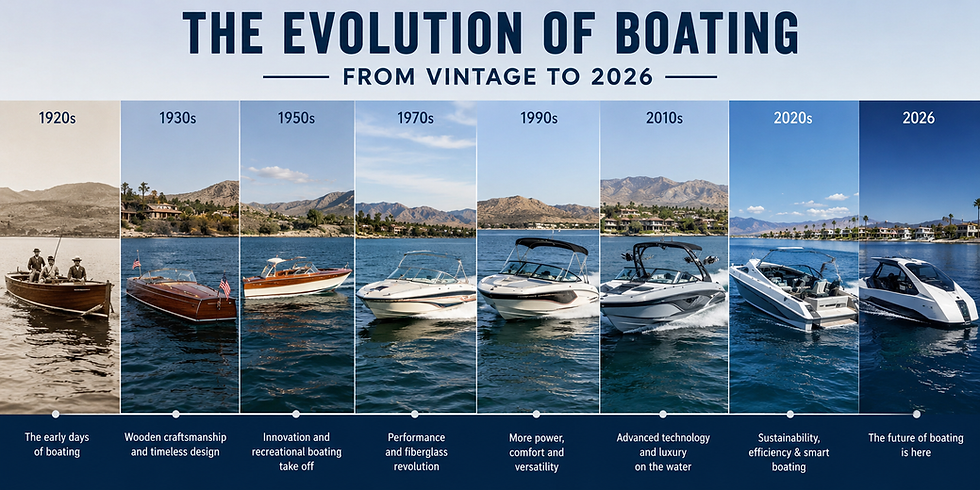
The history of boating reveals humanity's experience across water, beginning over 12,000 years ago when early humans first built primitive watercraft. Two-thirds of Earth's surface is water, and developing boats became essential to transportation and survival. Ancient civilizations pioneered breakthroughs we still use today, from Egyptian reed vessels dating to 4000 BCE to wooden ships capable of transoceanic voyages by 2500 BC. Boating has transformed into a recreational activity in modern times, An estimated 85 million Americans go recreational boating each year, according to data from the National Marine Manufacturers Association (NMMA). Globally, participation reaches massive numbers alongside roughly 30 million recreational boats worldwide and 11 million registered boats in use across the United States. This piece walks you through the rise of boats from ancient rafts and sailing ship history through the industrial revolution to today's classic wooden boats and modern performance vessels. You'll learn how centuries of breakthroughs shaped the boating traditions we enjoy today.
Ancient Origins and Early Watercraft (4000 BC - 1000 AD)

The First Boats: Prehistoric Rafts and Dugout Canoes
Humans created rafts as their earliest watercraft because they required minimal woodworking skills. The Pesse canoe stands as the oldest surviving prehistoric boat and dates to approximately 10,000 years ago. Dugouts coexisted with hide-covered boats, though these rarely survived to investigate archeologically. The Dufuna canoe from Nigeria represents the oldest boat found in Africa. This 8,000-year-old dugout shows how early African communities mastered water transport.
Egyptian Reed Boats and the Development of Sails
Egyptians built papyrus reed boats beginning sometime around the 4th millennium BCE. These vessels featured upturned ends secured by hogging trusses to prevent sagging. Papyrus offered ready availability and required little technical skill to work with. The rafts lasted less than a year due to waterlogging.
Wooden vessels appeared after the development of copper tools, possibly as early as 3400 BCE. Iconographic evidence of sail use in Egypt dates to the late fourth millennium BC. A vase found in Gerzeh, Egypt contains the oldest known depiction of a sail. This artifact dates to around 3300-3100 BCE and depicts a single square sail positioned well-forward on the vessel.
Phoenician Galleys and Mediterranean Trade
The Phoenicians pioneered locked mortise and tenon joints in nautical joinery to secure underwater planking. Their civilization spread across the Mediterranean during the first millennium BC, between 1200 BC and 900 BC. They created the bireme and used galleys as man-powered sailing vessels. The Uluburun ship, dated around 1320 BC, shows early examples of Phoenician joinery. The Cape Gelidonya ship from 1200 BC demonstrates similar techniques.
Viking Longships and Clinker Construction

Nordic clinker-built ships featured overlapping planks that acted as longitudinal strengthening elements in the hull. The Nydam boat from 320 AD represents an almost complete example with overlapping planks joined with iron nails. Viking longships measured between 17 and 37 meters long. They could accommodate up to 60 crew members.
Chinese Junks and Eastern Breakthroughs
Chinese junks evolved from tapering rafts rather than dugout canoes. This resulted in flat-bottomed designs without keels. The stern-mounted rudder steered junks as early as the 1st century AD, a good thousand years before the European version. Watertight compartments, inspired by bamboo's inner structure, had been mainstream features for at least a millennium before European travelers marveled at this invention in the 15th century.
Medieval Maritime Advances to Age of Exploration (1000-1700s)
Rudders and Improved Ship Control
Steering mechanisms went through dramatic improvements during the medieval period. Rudders fixed to the sternpost became common after the 11th century and replaced the older quarter-rudder systems mounted on ship sides. Northern European shipwrights faced a technological crisis when their inflexible quarter-rudder designs couldn't adapt to larger vessels. They developed the pintle-and-gudgeon system as a response, a hinge device that mounted rudders directly on the stern. Larger warships required even more control by the 16th century. This led to the whipstaff, a vertical lever that connected the tiller to upper decks where captains commanded.
Multi-Masted Sailing Ships for Global Exploration
Ship progress accelerated during the 15th century through the fusion of northern European clinker-built traditions with Mediterranean carvel construction. Full-rigged ships emerged with three masts: foremast and mainmast carrying square sails, plus a mizzen with lateen rigging. Caravels became essential exploration vessels and combined lateen and square sails for windward sailing capability. Galleons followed in the early 16th century and developed from caravels and carracks to create longer, lower vessels capable of transoceanic voyages.
Early Yachts and Royal Vessels

The term "yacht" emerged in the 16th century when the Dutch used it to describe light, fast ships. Wealthy Dutch merchants built private vessels to greet their returning trade ships and soon used them for pleasure trips. Charles II of England received the Dutch yacht Mary in 1660, which sparked yachting as a leisure activity among European royalty.
Development of Trading Routes and Ports
Medieval maritime trade networks expanded substantially between 1400-1580 and connected over 600 ports in England and Wales. The spice trade stimulated shipping growth, with Venetian and Genoese merchants controlling Mediterranean routes from the 8th through 15th centuries.
The Industrial Revolution and Mechanized Boats (1800s-1910s)
Iron Hulls Replace Wooden Construction
Ships built from wood faced a hard limit at roughly 80 meters in length. Structural problems made vessels unseaworthy beyond that point. The industrial revolution changed everything when shipbuilders started using iron in the 1800s. Iron ships could be much larger and required less maintenance. They provided nowhere near the cargo space of wooden vessels.
Aaron Manby became the first iron steamship to go to sea in 1821, crossing the English Channel in 1822. Isambard Kingdom Brunel's Great Britain, launched in 1843, was the first ship built from wrought iron. Steel began replacing iron in the 1880s. It offered greater strength and lighter weight to construct faster, larger vessels.
Steam Power Transforms Water Transportation

William Symington engineered the Charlotte Dundas in 1801, the first steam-powered vessel introduced to use practically. She towed barges on the Forth-Clyde canal and proved steam's viability to propel marine vessels. Robert Fulton's Clermont began scheduled passenger service in 1807 between New York and Albany.
Steam engines consumed massive amounts of coal. A steamship built in 1855 required about 40% of its cargo space just to store enough coal to cross the Atlantic. Efficiency improvements made transatlantic steamship services economical by the 1860s.
The Invention of Propellers
Screw propellers replaced paddle wheels in steamships from the 1840s. Francis Pettit Smith and John Ericsson both patented screw propeller designs in 1836. Smith's SS Archimedes, built in 1838, became the first large steamer using a screw propeller.
Ericsson introduced propellers to vessels on canals and inland waterways in 1839. His most enduring invention remained the main form of marine propulsion through the centuries. The SS Great Britain became the first screw-propelled steamship to cross the Atlantic Ocean in 1845.
Gasoline Engines and Early Motorboats
Gottlieb Daimler and Wilhelm Maybach tested the earliest petrol engine boat on the Neckar River in 1886. The Priestman Brothers designed the first successful motor boat in Hull, England, with trials beginning in 1888. Their kerosene-powered engine used a high-tension ignition system.
The Daimler Company began motor boat production in 1897 from Coventry. A safer apparatus to ignite fuel with an electric spark wasn't used in motor boats until 1901.
Birth of Outboard Motors
Cameron B. Waterman built an outboard motor in 1903 using an air-cooled motorcycle engine connected to a propeller. Production started in 1906, and the motor of 1906 is regarded as the first commercially produced outboard generally. Waterman sold 3,000 units in 1907 after redesigning it to be water-cooled.
Ole Evinrude created an outboard motor in 1907 that revolutionized boating. He formed the Evinrude Detachable Rowboat Motor Company with his wife Bess in 1909. The design featured a vertical crankshaft and bevel gears at 1.5 horsepower, establishing the simple template still used in modern outboard engines.
The Rise of Recreational Boating and Modern Era
"To reach a port we must set sail – Sail, not tie at anchor. Sail, not drift." — Franklin D. Roosevelt, 32nd President of the United States
From Kings to the Public: Making Boating Available
Charles II of England became the world's first yachtsman after receiving a yacht in 1660. Boating remained exclusive to wealthy elites until internal combustion engines changed everything. The first U.S. boating club formed in Detroit in 1839, followed by New York in 1845. Gottlieb Daimler's improved internal combustion engine in the late 1800s removed the need for hired crews and made boats more available.
Fiberglass Revolution and Mass Production

Ray Greene built the first fiberglass boat hull in 1942. Fiberglass overtook wood by the late 1950s. Companies like Chris-Craft and Pearson Yachts adopted it for mass production. The Pearson Triton became one of the first mass-produced fiberglass sailboats in the mid-1950s. Traditionalists called them "plastic fantastic'" but owners appreciated lower maintenance and longer lifespans.
The Boating Industry Boom (1950s-1960s)
Post-war growth exploded. Just under 450,000 registered motorboats existed in 1950. The industry sold that many in one year by 1959. Boating became the nation's top family sport in 1960.
Modern Performance Boats and Classic Wooden Boats
Performance boats progressed with carbon fiber and advanced composites. Classic wooden boat preservation runs on through organizations focused on restoration.
Whether You Fish, Cruise, or Ride, There's a Watercraft for You

Today's boating industry offers an incredible variety of watercraft designed to match every lifestyle and adventure. Whether you're looking for a versatile bowrider for family outings, a spacious pontoon for relaxing cruises, a center console for serious fishing, a comfortable cabin cruiser for overnight trips, a rugged fishing boat for chasing the next big catch, or a high-performance personal watercraft (jet ski) for adrenaline-filled fun, there's a perfect option for every boater. Thanks to modern technology, today's boats and PWCs are safer, more fuel-efficient, and packed with advanced features that make every trip on the water more enjoyable. No matter where your next destination takes you, today's watercraft are built to help you create unforgettable memories and enjoy your next great adventure with confidence.
How Understanding Boating History Helps Modern Owners
Whether you own a classic boat or a brand-new watercraft, keeping it protected and looking its best starts with quality craftsmanship. Seam Dreams specializes in custom boat upholstery and marine canvas designed to withstand the Lake Havasu climate. Contact our team today to discuss your next custom project and get your boat ready for your next adventure on the water.
Conclusion
Boating has evolved from simple rafts to sophisticated vessels over thousands of years. This rich history reminds us that craftsmanship and innovation have always driven the marine industry. Whether you own a vintage classic or a modern performance boat, protecting your investment is just as important today as it was generations ago. At Seam Dreams, we specialize in custom marine upholstery, boat covers, and Bimini tops designed to keep your boat looking its best on Lake Havasu. By combining time-tested craftsmanship with today's premium marine materials, Seam Dreams helps preserve your boat's comfort, style, and durability for many years of adventures on the water.
Key Takeaways
Boating's 12,000-year evolution showcases humanity's ingenuity in conquering water, from prehistoric rafts to today's high-tech vessels.
• Ancient civilizations pioneered innovations still used today—Egyptian sails (3300 BCE), Chinese stern rudders (1st century AD), and Viking clinker construction shaped modern boating.
• The Industrial Revolution transformed watercraft through iron hulls, steam power, and propellers, enabling larger vessels and making transoceanic travel practical by the 1860s.
• Fiberglass revolutionized boat manufacturing in the 1950s, replacing wood construction and enabling mass production that made recreational boating accessible to millions.
• Modern recreational boating generates $230 billion annually in the U.S., supporting over 812,000 jobs—a testament to how far we've come from royal-only yachting.
• Understanding boating history helps owners appreciate their vessels' heritage and make informed decisions about maintenance, restoration, and protection using quality materials and craftsmanship.
FAQs
Q1. When did recreational boating become popular among the general public? Recreational boating remained exclusive to royalty and wealthy elites until the late 1800s when internal combustion engines made boats more accessible. The industry experienced explosive growth after World War II, with registered motorboats increasing from under 450,000 in 1950 to selling that many in a single year by 1959. By 1960, boating had become the nation's top family sport.
Q2. What is the oldest known boat ever discovered?
The Pesse canoe is the oldest surviving prehistoric boat, dating back approximately 10,000 years. This dugout canoe represents the earliest archeological evidence of watercraft. Rafts likely existed even earlier since they required minimal woodworking skills, but they rarely survived for archeological study.
Q3. Did wealthy people use boats for pleasure in ancient times?
Yes, pleasure boating dates back thousands of years. Ancient Egyptians built light papyrus craft believed to be funerary or pleasure vessels around 4000 BCE. Romans constructed elaborate pleasure barges, including the famous Nemi ships. Medieval nobles also enjoyed river boating on lakes and rivers, which were considered safer than the unpredictable ocean.
Q4. How did fiberglass change the boating industry?
Fiberglass revolutionized boat manufacturing starting in 1942 when Ray Greene built the first fiberglass hull. By the late 1950s, fiberglass had overtaken wood as the primary construction material. Companies like Chris-Craft and Pearson Yachts adopted it for mass production, making boats more affordable, easier to maintain, and longer-lasting than traditional wooden vessels.
Q5. Who is considered the world's first yachtsman?
Charles II of England is recognized as the world's first yachtsman. He received a Dutch yacht called the Mary in 1660, which sparked yachting as a leisure activity among European royalty. This marked the beginning of recreational boating among the wealthy, though it would be centuries before boating became accessible to the general public.


Comments